


How to Choose the Right Dog Harness for Your Dog
How to Choose the Right Dog Harness for Your Dog
Choosing a dog harness sounds simple enough… until you realise there are about a million different styles, sizes, clips, buckles, straps and “no-pull” promises floating around.
And then your dog stands there looking at you like, please don’t make this weird.
The truth is, the best dog harness depends on your dog’s size, shape, walking style, confidence level and how much control you need on walks. A tiny wriggly Chihuahua, a strong Kelpie, a nervous rescue dog and a chunky little Frenchie are probably not going to need the exact same harness.
At Dizzy Dog Collars, we offer a range of dog harnesses designed for different dogs, from soft everyday harnesses to stronger no-pull styles for dogs who think walks are actually sled-pulling competitions.
Start With Your Dog’s Body Shape
Dogs are not all built the same. Some have tiny necks and deep chests. Some have big heads and narrow bodies. Some are long, low and sausage-shaped. Some are built like a brick with ears.
Before choosing a harness, look at your dog’s shape.
A harness should sit comfortably around the chest without digging under the front legs. It should not restrict shoulder movement, twist around the body, or sit so close to the throat that it puts pressure on the neck.
This is one of the reasons we love Y-shaped harness designs. They allow the front legs and shoulders to move more naturally, which is especially important for older dogs, strong dogs, growing puppies and dogs who already have stiffness or arthritis.
For Strong Pullers: Choose a No-Pull Harness
If your dog walks beautifully on lead, congratulations. Please tell the rest of us what magic spell you used.
For dogs who pull, lunge, bounce, zigzag, or temporarily forget every bit of training when they see a bird, a no-pull dog harness can be a better option.
Our no-pull styles are designed to give you more control while still keeping your dog comfortable. Many include front and back lead attachments, so you can use the front D-ring to help redirect your dog’s attention back towards you.
This does not magically train your dog overnight, sadly. If it did, I would be selling it for a lot more. But it can make walks easier while you work on loose-lead training.
A no-pull harness with handle is a great choice for stronger dogs, busy walking areas, or pups who need a little extra guidance. The handle is handy for quick control, but it is not designed for lifting your dog.
For Nervous or Head-Shy Dogs: Try a Step-In Harness
Some dogs do not love things going over their head. Some dogs act like you are trying to place them under arrest.
For those pups, a step-in harness can be a much easier option. Your dog simply steps into it, then it clips up around the body.
Step-in harnesses are especially useful for smaller dogs, nervous dogs, puppies, older dogs, and dogs who get overwhelmed when a harness has to go over their head.
They are also a great everyday option for dogs who do not need a heavy-duty harness but still need something secure and comfortable for walks.
For Growing Puppies: Adjustable Is Your Friend
Puppies are adorable, chaotic little potatoes who seem to change size every time you blink.
If your dog is still growing, a neck adjustable harness can be a great option because it gives you more flexibility around both the neck and chest.
This style is also useful for dogs who are tricky to fit in standard harnesses, especially if they are between sizes or have a slightly unusual build.
Just make sure you check the fit regularly. Puppies can outgrow a harness faster than they can destroy a toilet roll.
For Everyday Walks: Comfort Matters Most
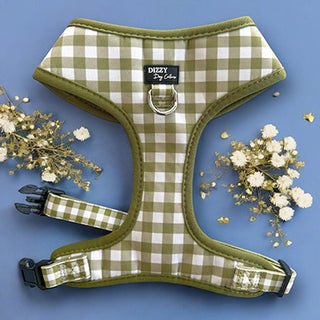
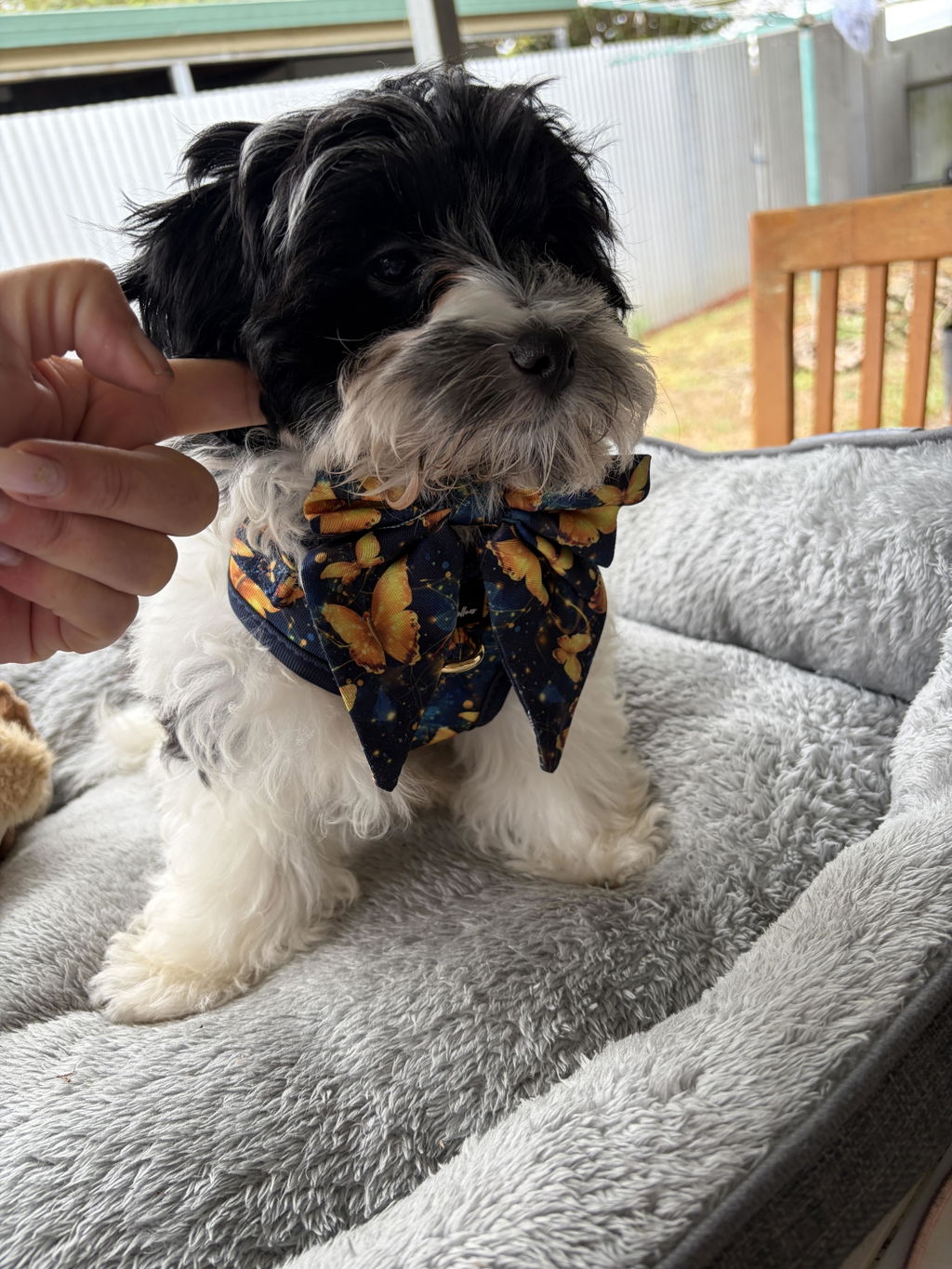
Not every dog needs the strongest, most structured harness. If your dog walks nicely and you just want something soft, secure and cute, an everyday harness may be perfect.
Look for:
- A comfortable fit around the chest
- No rubbing under the arms
- Adjustable straps
- A shape that allows shoulder movement
- Strong hardware
- A secure lead attachment
- Fabric that suits your dog’s lifestyle
And yes, looking cute absolutely counts. Your dog may not care, but we do.
You can browse our full range of dog harnesses here.
Don’t Forget the Matching Lead and Collar
Once you have chosen the right harness, you can complete the look with a matching lead, collar or accessories.
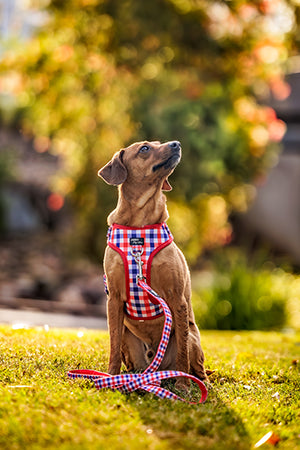
Our matching dog harness and lead sets are perfect if you like your dog looking put together, even if they are personally committed to rolling in something questionable at the park.
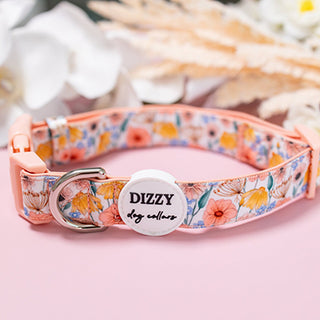
You can also browse our dog collars if you want a matching collar for ID tags or everyday wear.
How Should a Dog Harness Fit?
A harness should be snug but not tight. You should be able to fit two fingers between the harness and your dog’s body.
It should not:
- Rub behind the front legs
- Sit too close to the throat
- Slide around excessively
- Restrict shoulder movement
- Gap open at the chest
- Twist when your dog walks
If your dog is between sizes, always check the size guide for the specific harness style. Different styles fit differently, so your dog may not be the same size across every harness.
The Best Harness Is the One That Suits Your Dog
There is no one perfect harness for every dog. The right choice depends on your dog’s body shape, confidence, strength, walking habits and comfort needs.
A strong puller may need a more structured no-pull harness. A nervous little dog may do better in a step-in style. A growing puppy may need something adjustable. An older dog may need a soft, comfortable harness that does not restrict movement.
The goal is simple: a harness that fits well, feels good, gives you the right level of control and makes walkies more enjoyable for both of you.
Because walks should be fun, not a full-body workout where your dog pretends they are training for the Iditarod.
Ready to find the right fit? Browse our full range of dog harnesses at Dizzy Dog Collars.
Leave a comment